Along a narrow strip of the eastern Mediterranean coast, in what is today Lebanon and parts of Syria and Israel, a cluster of independent city-states grew wealthy not from large territories or abundant farmland but from the sea itself. Historians and archaeologists generally refer to these city-states, including Tyre, Sidon, Byblos, and Arwad, as Phoenicia, though the people who lived there did not use that name for themselves; it was a label applied by Greek writers, possibly derived from a word associated with the purple dye the region's merchants were famous for producing. Many scholars estimate that Phoenician maritime activity became a major force in Mediterranean commerce by roughly 1200 to 800 BCE, though trade contacts along this coast likely extended further back, and the civilization's influence continued for centuries afterward through colonies founded far from its original homeland.
Origins Along a Resource-Poor Coast
The geography of the Phoenician homeland helps explain why its cities turned so decisively toward the sea. The coastal strip was narrow, backed by mountains, and offered limited farmland compared to the great river valleys of Egypt or Mesopotamia. What the region did have was access to excellent natural harbors, abundant cedar and pine timber from the mountains, and a long tradition of craftsmanship. Rather than compete for agricultural land, the city-states specialized in shipbuilding, metalworking, glassmaking, and the production of a rare and expensive purple-red dye extracted from the murex sea snail, a substance so costly that it became associated with royalty and later gave the Latin-derived word "purple" much of its prestige.
These cities were never unified into a single Phoenician empire. Instead, they functioned as independent, often rival, city-states that sometimes cooperated and sometimes competed for trade routes and resources. This decentralized structure is itself significant: it shows that large-scale, influential trade networks in the ancient world did not require a centralized state to flourish, but could instead emerge from loosely connected merchant communities pursuing their own commercial interests.
Ships, Colonies, and the Reach of a Trading Network
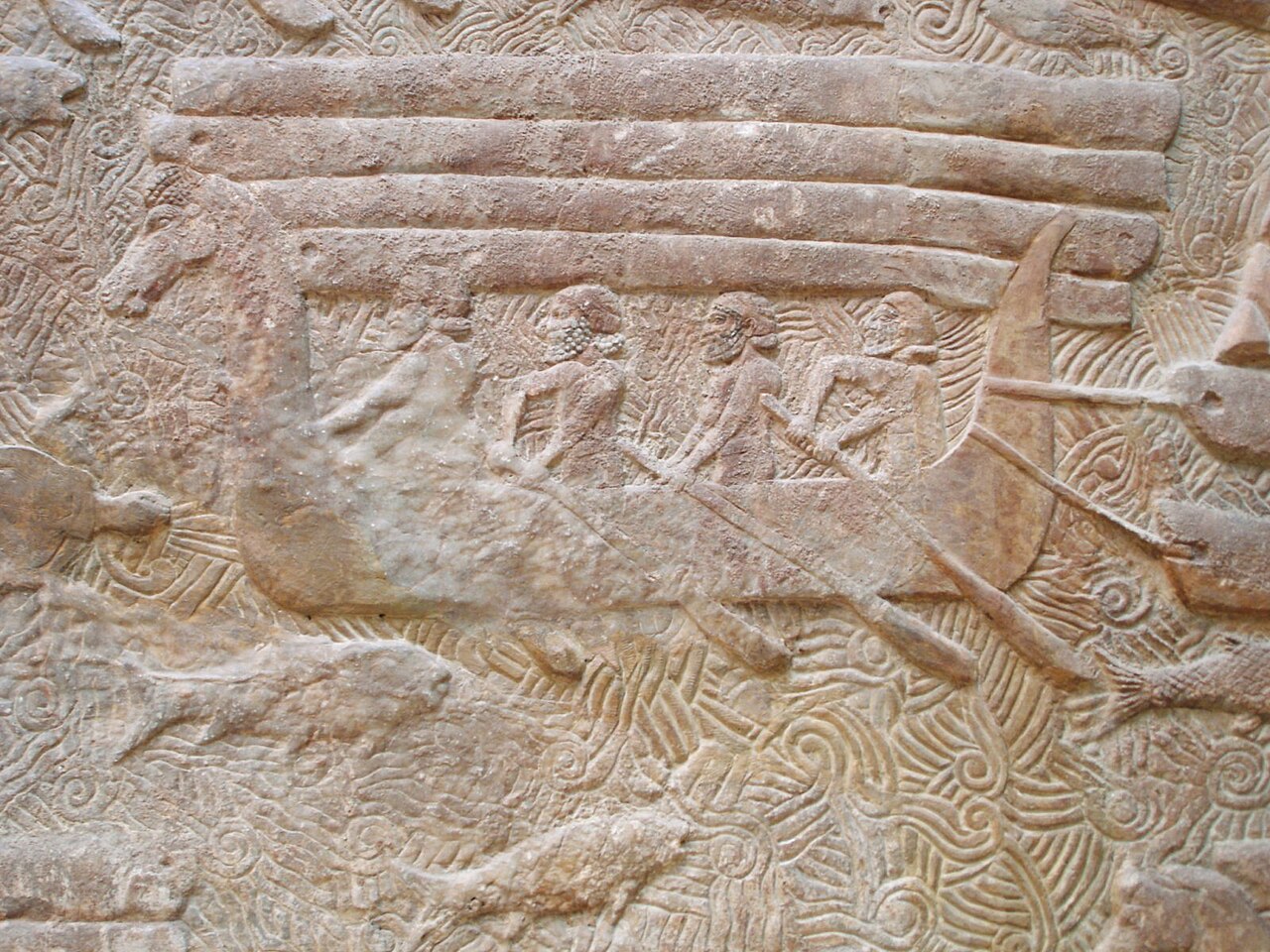
Phoenician shipbuilders developed vessels capable of long open-water voyages, and their sailors became known for navigating by the stars, a skill later Greek writers credited to them, sometimes calling the North Star the "Phoenician star." Merchant ships carried timber, dyed textiles, glassware, wine, metalwork, and enslaved people across the Mediterranean, while trading posts and colonies extended Phoenician commercial reach far beyond the Levant. Cities such as Carthage in North Africa, founded according to tradition in the ninth century BCE, along with settlements in Sicily, Sardinia, and southern Iberia, functioned as waypoints that allowed goods, raw materials such as silver and tin, and cultural practices to move across enormous distances. Some evidence suggests Phoenician or Phoenician-linked sailors ventured along the Atlantic coast of Africa and possibly reached the British Isles in search of tin, though the extent of these voyages remains debated among historians.
Perhaps the most enduring Phoenician contribution to world history was not a material good at all but a writing system. The Phoenician alphabet, a simplified set of symbols representing consonant sounds, spread through trade contact to the Greeks, who adapted it and added vowel symbols, and from Greek it eventually influenced the Latin alphabet used across much of the world today. This linguistic legacy illustrates how commercial networks carried far more than goods; they transmitted ideas, technologies, and systems of knowledge between cultures that might otherwise have had little contact. For a broader look at how such ancient networks developed, see the timeline of ancient trade.
Competition, Conflict, and the Costs of Commercial Success
Phoenician prosperity did not exist in a vacuum, and it came with real costs, both to the Phoenicians themselves and to others. The city-states paid tribute to larger regional powers at various points, including Assyria and later the Neo-Babylonian and Persian empires, which limited their political independence even as their merchants continued to operate. The slave trade formed a documented part of Phoenician commerce, and ancient sources describe Phoenician traders as participants in the broader ancient Mediterranean practice of buying and selling captives, a grim reminder that expanding trade networks in the ancient world frequently included human trafficking alongside the exchange of goods.
The colonial city of Carthage eventually grew into a major power in its own right, and its rivalry with the expanding Roman Republic led to the three Punic Wars between 264 and 146 BCE. These conflicts ended catastrophically for Carthage, which Roman forces destroyed in 146 BCE, an event many historians cite as a stark illustration of how commercial rivalry between ancient powers could escalate into prolonged, devastating warfare. The destruction of Carthage also meant the loss of much of its own historical record, which is part of why so much of what is known about Phoenician civilization comes from external sources, including Greek and Roman writers, Egyptian records, and the archaeological record itself, rather than extensive surviving Phoenician texts.
Lasting Significance for Global Trade History
Despite the eventual eclipse of Phoenician political power, the commercial model the Phoenicians helped pioneer left a durable mark on how later civilizations approached long-distance trade. Their network demonstrated that small, resource-limited states could build outsized economic influence through specialization, shipbuilding expertise, and a willingness to establish distant colonies as trading outposts rather than conquered territories. The alphabet that spread along their trade routes became foundational to writing systems still used by billions of people, a legacy that arguably outlasted every other aspect of their civilization. Later Mediterranean trading powers, including Greek city-states and eventually Rome itself, built on infrastructure, routes, and commercial relationships that Phoenician merchants had helped establish centuries earlier. The Phoenician experience also offers an early example of a recurring pattern in trade history: economic networks built on maritime commerce could generate immense wealth and cultural exchange, yet remained vulnerable to the political and military ambitions of larger neighboring powers, a tension that would recur throughout the history of trade explored elsewhere on this site, including in the story of Roman commercial expansion that followed.