For most of human history, moving goods any distance over land was slow, expensive, and often impractical. A wagon pulled by horses or oxen could carry only a modest load, and a day's travel rarely exceeded twenty or thirty miles on a good road. Rivers and canals helped where they existed, but vast interior regions of continents remained economically isolated simply because nothing affordable could reach them. The railroad, developed through the combined work of engineers, investors, and laborers across Britain, continental Europe, and North America in the early nineteenth century, changed that calculus so thoroughly that historians often treat it as one of the clearest dividing lines between the pre-industrial and industrial economies.
The technology did not spring from a single inventive moment. Experiments with iron rails and horse-drawn wagons in British mining districts date back to the 1700s, and early stationary and locomotive steam engines were refined by numerous engineers, including George Stephenson and his son Robert, whose Stockton and Darlington Railway opened in 1825 and whose Liverpool and Manchester Railway followed in 1830. Many historians note that Stephenson built on decades of prior tinkering by others rather than inventing steam rail transport outright. What made these lines significant was less the novelty of steam power itself, which had already been applied to pumps and factory machinery, than the demonstration that steam locomotion could reliably haul both passengers and freight over long distances at speeds no animal could sustain.
From Local Curiosity to Continental Network
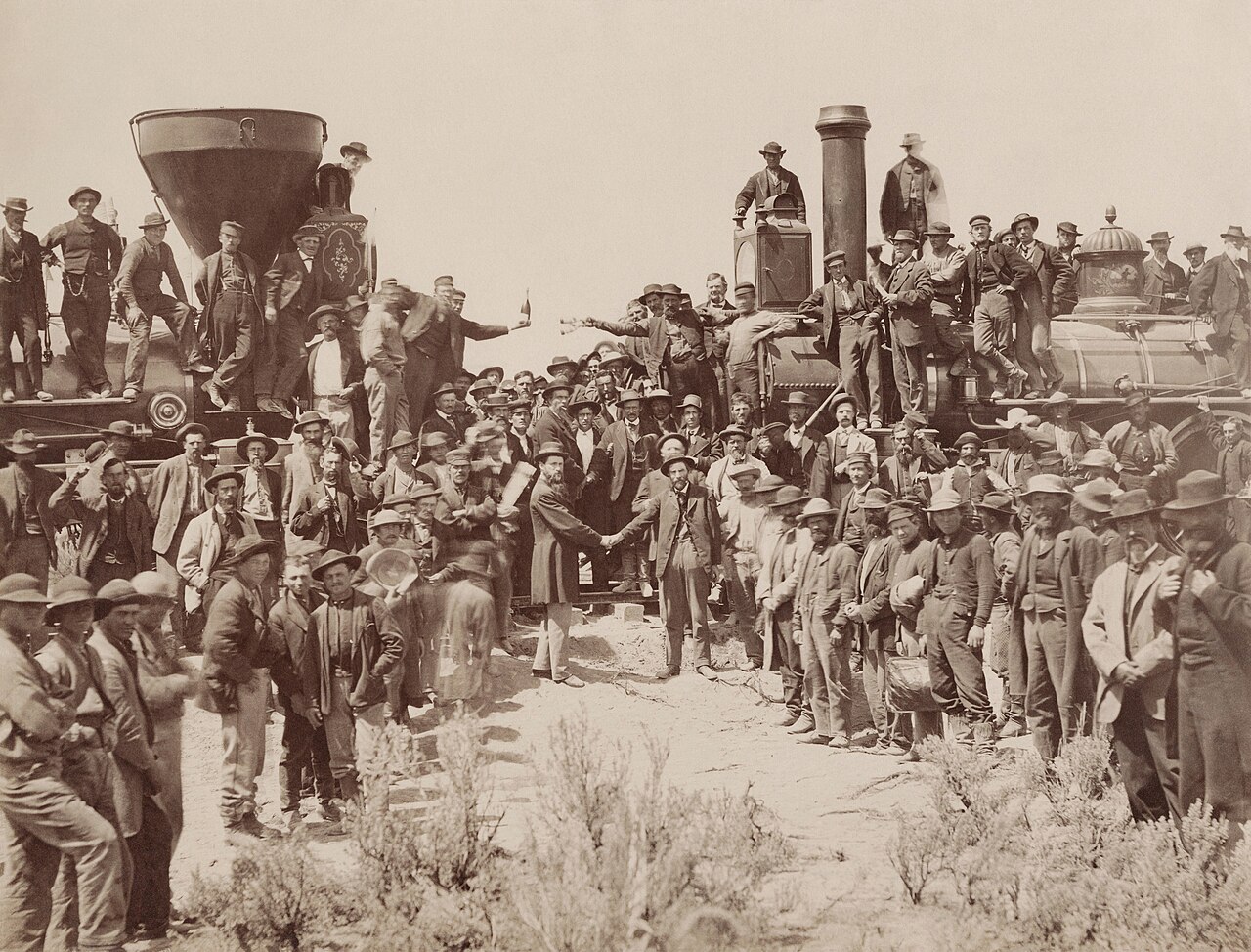
Once the basic model proved commercially viable, construction spread with striking speed. Britain's rail mileage grew from a few dozen miles in the late 1820s to thousands by mid-century. The United States, with its enormous interior and chronic shortage of good roads, embraced railroads even more aggressively; the first common-carrier line, the Baltimore and Ohio, broke ground in 1828, and by 1869 the completion of the first transcontinental line linked the Pacific coast to the rail networks of the East. German states, France, Belgium, and the Habsburg territories built their own systems through the 1840s and 1850s, often with direct government involvement, while colonial administrations extended rail construction into British India, where track mileage expanded dramatically from the 1850s onward, and into parts of Latin America, Africa, and Southeast Asia, usually to move cash crops and minerals toward ports rather than to serve local populations evenly.
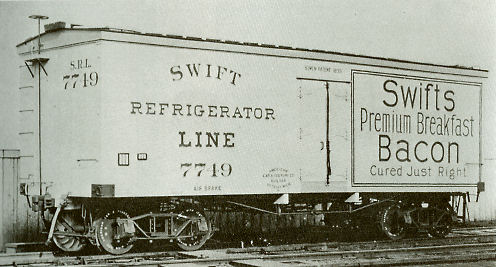
The economic effects were immediate and cumulative. Grain grown in the American Midwest or the Indian Punjab could now reach distant ports cheaply enough to compete in European markets. Coal and iron ore moved from inland mines to coastal foundries at a fraction of previous cost, which in turn lowered the price of manufactured goods. Perishable or bulky commodities that had never been worth shipping far suddenly became tradeable. Towns located along new lines often grew rapidly, while places bypassed by the railroad frequently stagnated or declined, a pattern visible across the American Midwest, rural Britain, and colonial India alike. For more on how this era's technologies reinforced one another, see the broader survey at the industrial era timeline.
Labor, Capital, and the Costs of Speed
Building and running this infrastructure demanded labor on a scale few earlier projects had required. Hundreds of thousands of workers, including Irish immigrants in North America and Britain, Chinese laborers on the American transcontinental lines, and conscripted or indentured workers in colonial territories, graded roadbeds, laid track, and blasted tunnels, often under dangerous conditions with little legal protection. Fatal accidents from explosives, collapses, and train crashes were common, and wages, while sometimes better than agricultural alternatives, rarely matched the risks involved. Railroad corporations also became some of the first large, bureaucratically managed enterprises in modern history, pioneering standardized accounting, time schedules, and management hierarchies that later spread to other industries.
The financial side of railroad expansion carried its own dangers. Speculative overbuilding, particularly in the United States and Britain, produced boom-and-bust cycles; the Panic of 1873, triggered partly by overextended railroad investment, plunged much of the industrialized world into a prolonged depression. Many lines were financed through land grants, government bonds, or foreign capital, which concentrated enormous economic and political power in the hands of railroad companies. In the United States this power provoked sustained public backlash, eventually contributing to regulatory bodies such as the Interstate Commerce Commission, established in 1887 to curb discriminatory freight rates. Railroads also displaced older transport industries, including canal operators, long-distance wagon haulers, and stagecoach lines, whose workers and investors often had no comparable alternative once rail service arrived.
Environmental and Geopolitical Consequences
Railroads reshaped landscapes as much as markets. Construction required enormous quantities of timber for ties and bridges, iron and later steel for rails, and coal to fuel locomotives, all of which intensified resource extraction and, in many regions, deforestation. In North America, rail expansion accelerated the displacement of Indigenous peoples, as lines cut through traditional territories and facilitated settler migration, military deployment, and the near-elimination of bison herds that many Plains nations depended upon. In colonial contexts, rail networks were frequently designed to extract resources efficiently for export rather than to foster balanced regional development, a legacy that shaped post-colonial economies for generations afterward.
Railroads also became instruments of state power and military strategy. Governments recognized early that rail networks allowed armies and supplies to move with unprecedented speed, a factor that influenced conflicts from the American Civil War, where rail logistics shaped campaign strategy, to the mobilization plans that European general staffs drew up before the First World War. Control over rail routes and tariffs became a recurring source of diplomatic friction, and some historians argue that the dense, competing rail systems of early twentieth-century Europe made rapid, large-scale mobilization easier, contributing to how quickly the 1914 crisis escalated, though this remains a debated point among specialists rather than a settled consensus.
Lasting Significance for Global Trade
By the early twentieth century, railroads had fundamentally altered the geography of commerce. Interior regions that had once been marginal to world trade, from the American prairie to the Ukrainian steppe to inland India, became major exporters of grain, cotton, coal, and ore. Port cities grew explosively as rail lines funneled interior production toward them, and the combination of rail and steamship transport created the first truly integrated global commodity markets, in which a harvest failure or bumper crop on one continent could move prices on another within weeks rather than months. Readers interested in how maritime transport completed this global linkage may wish to continue to steamships and the transformation of maritime commerce.
The railroad's legacy for trade history is therefore double-edged. It lowered costs, widened markets, and connected producers and consumers across unprecedented distances, laying groundwork that modern freight networks still build upon. At the same time, it concentrated capital in the hands of a few large corporations, displaced workers and entire transport industries, imposed heavy environmental costs, and often served colonial extraction more than broad-based development. Both strands of that history remain visible in the freight rail systems, high-speed lines, and contested infrastructure projects of the present day, making the nineteenth-century railroad one of the foundational chapters in the story of how the modern world came to trade as it does.