For millennia, the pace of maritime trade was set by wind, current, and the skill of crews who learned to work with both. Sailing ships could cross oceans, but their schedules were unpredictable, their routes constrained by prevailing wind patterns, and their cargo capacity limited by the need to carry provisions for voyages whose length could not be guaranteed in advance. The gradual adoption of steam propulsion across the nineteenth century, building on decades of experimentation by numerous engineers and shipbuilders in Britain, the United States, and continental Europe, did not eliminate sail overnight, but it steadily reshaped what was possible in ocean trade, making shipping schedules more reliable and eventually making sailing vessels uncompetitive on most major routes.
Early steam vessels, including experimental riverboats tested by various inventors in Europe and North America in the late eighteenth century, were confined mostly to rivers and coastal waters, since early engines were inefficient and consumed enormous amounts of coal relative to the power they produced. Robert Fulton's Clermont, which began regular service on the Hudson River in 1807, is often cited as a landmark, though Fulton drew on earlier steamboat experiments by figures such as John Fitch and others, and many historians caution against treating any single voyage as the definitive birth of steam navigation. Ocean crossings remained impractical for steam power alone until marine engines became efficient enough, and ships large enough, to carry sufficient coal for an entire Atlantic crossing.
From Hybrid Vessels to Steam Dominance
The transition unfolded gradually through hybrid designs. Early transatlantic steamers of the 1830s and 1840s, such as those operated by the Great Western Steamship Company, typically carried sails as a supplement or backup to their engines, since coal capacity limited range and breakdowns were common. The switch from paddle wheels to the more efficient screw propeller during the mid-nineteenth century, along with the development of the compound steam engine, which reused expanding steam to extract more work per unit of coal, dramatically improved fuel efficiency and made long steam-only voyages commercially practical by the 1860s and 1870s. The opening of the Suez Canal in 1869 particularly benefited steamships, since the canal's navigation conditions suited steam power far better than sail, immediately shortening the journey between Europe and Asia and redirecting trade away from the long sailing route around the Cape of Good Hope.
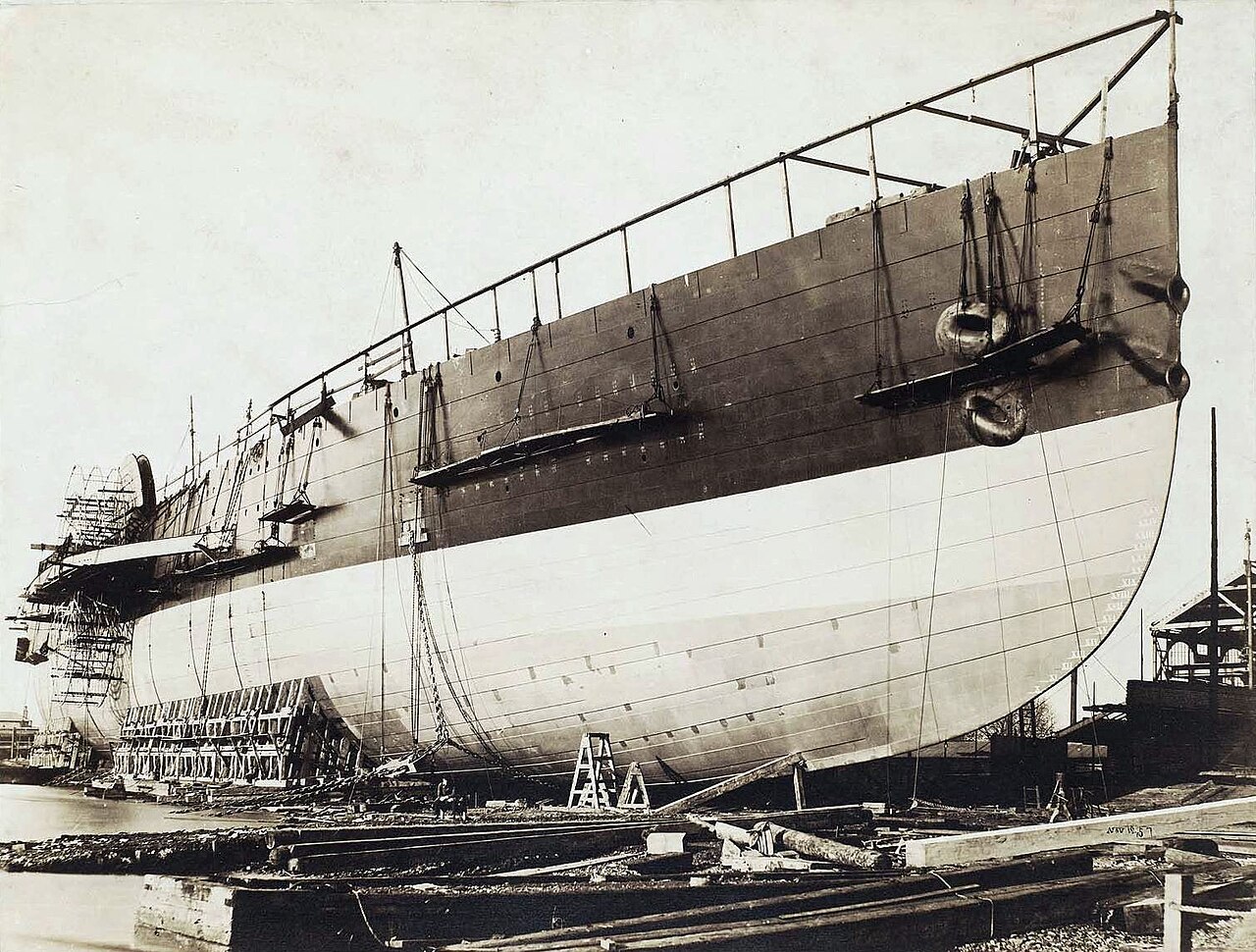
Iron and later steel hulls, which could be built larger and more durable than wooden ones, reinforced this shift, allowing shipbuilders in Britain, Germany, and the United States to construct vessels of a size that would have been structurally impossible in wood. By the 1880s and 1890s, steam had displaced sail on nearly every major trade route, and shipping lines competed intensely on speed, reliability, and scheduled departures rather than on the variable timing that sail had required. This reliability mattered enormously for commerce: merchants could now plan inventories, insurance, and financing around predictable arrival dates, a change that rippled through banking and commodity markets much as railroads were doing on land during the same decades, a connection explored further in railroads and the expansion of inland trade.
New Goods, New Routes, New Winners and Losers
Steam shipping made entirely new categories of trade viable. Live cattle, bulk grain, and eventually refrigerated meat and dairy could cross oceans on predictable schedules, supporting the kind of global food trade discussed in refrigeration and the global food trade. Passenger traffic also expanded enormously, carrying millions of migrants from Europe and Asia to the Americas, Australia, and elsewhere, often in crowded steerage conditions that bore little resemblance to the comfort advertised for first-class cabins. Port cities with good coaling facilities, such as Southampton, Liverpool, Hong Kong, Singapore, and later Suez-adjacent stops, grew in importance, while ports poorly suited to coal supply or deep-draft vessels declined in relative significance.
The labor behind this trade carried its own burdens. Stokers and engine-room crews worked in extreme heat shoveling coal for hours at a stretch, among the most physically punishing jobs in maritime work, and shipboard conditions for lower-class passengers and non-European crew, often recruited at lower wages from South Asia, China, and East Africa under labor arrangements that gave them little bargaining power, were frequently harsh. Older sailing trades, including the shipbuilders, sailmakers, and sailors tied to wind-powered commerce, saw their livelihoods erode over a few short decades, a displacement that paralleled the fate of canal and wagon transport on land. Shipping lines also consolidated into powerful cartels and conference systems that set freight rates collectively, drawing criticism from shippers who had little alternative but to accept the terms offered.
Power, Empire, and Environmental Cost
Steam navigation reinforced the naval and commercial power of industrialized nations, particularly Britain, which maintained the largest merchant and naval steam fleets through much of the nineteenth century and used coaling stations scattered across its empire to project both commercial and military reach. This infrastructure of coaling stations, canals, and shipping lanes became entangled with colonial control, since access to reliable fuel and repair facilities was often restricted to favored powers, reinforcing existing imperial hierarchies rather than opening maritime trade equally to all nations. The environmental costs, though less visible to contemporaries than they are to historians now, were also considerable: coal extraction to fuel the growing steam fleets intensified mining in Britain, the United States, and elsewhere, and the shift toward fuel oil in the twentieth century introduced new forms of marine pollution that would only later draw regulatory attention.
Steamship accidents, including notable disasters that drew wide public attention, spurred early international efforts at maritime safety regulation, including standardized lifeboat requirements and wireless communication at sea, which connects to broader communication developments of the era such as those covered in the telegraph and faster commercial communication. These regulatory responses, however, often arrived only after significant loss of life, reflecting a recurring pattern in which commercial expansion outpaced safety oversight.
Lasting Significance for Global Trade
By the early twentieth century, steam-powered shipping had made the ocean a far more predictable and economically integrated space than it had ever been under sail. Freight rates fell substantially over the course of the century, bringing previously marginal regions into global commodity markets and allowing specialization in production that would have been too risky when shipping schedules were uncertain. The combination of steam shipping, rail connections to interior production zones, and improving communication technology created the first genuinely synchronized global economy, in which prices, harvests, and industrial output in one part of the world routinely affected markets on the other side of the globe within days.
That transformation came at real cost in labor exploitation, environmental damage, and the reinforcement of colonial power structures, even as it lowered the price of goods and widened consumer access to products from distant regions. Modern container shipping, which still carries the overwhelming majority of global trade by volume, is a direct descendant of the scheduling reliability and scale economies that steam propulsion first made possible, making the steamship era a foundational, if morally complicated, chapter in the history of how goods move around the world.