For roughly a century, much of the world's trade and finance ran on a surprisingly simple idea: that a country's paper currency should be convertible into a fixed quantity of gold. The gold standard, as this system came to be called, did not emerge from a single treaty or decision but evolved gradually across the nineteenth century as Britain, then much of Europe, the Americas, and parts of Asia, tied their currencies to gold at fixed rates. In doing so, these countries created something new: a relatively predictable framework for settling international debts and financing cross-border trade, which helped knit together the first era of modern globalized finance even as it imposed real costs on the economies that adopted it.
Britain's Lead and the Spread of a Global Monetary System
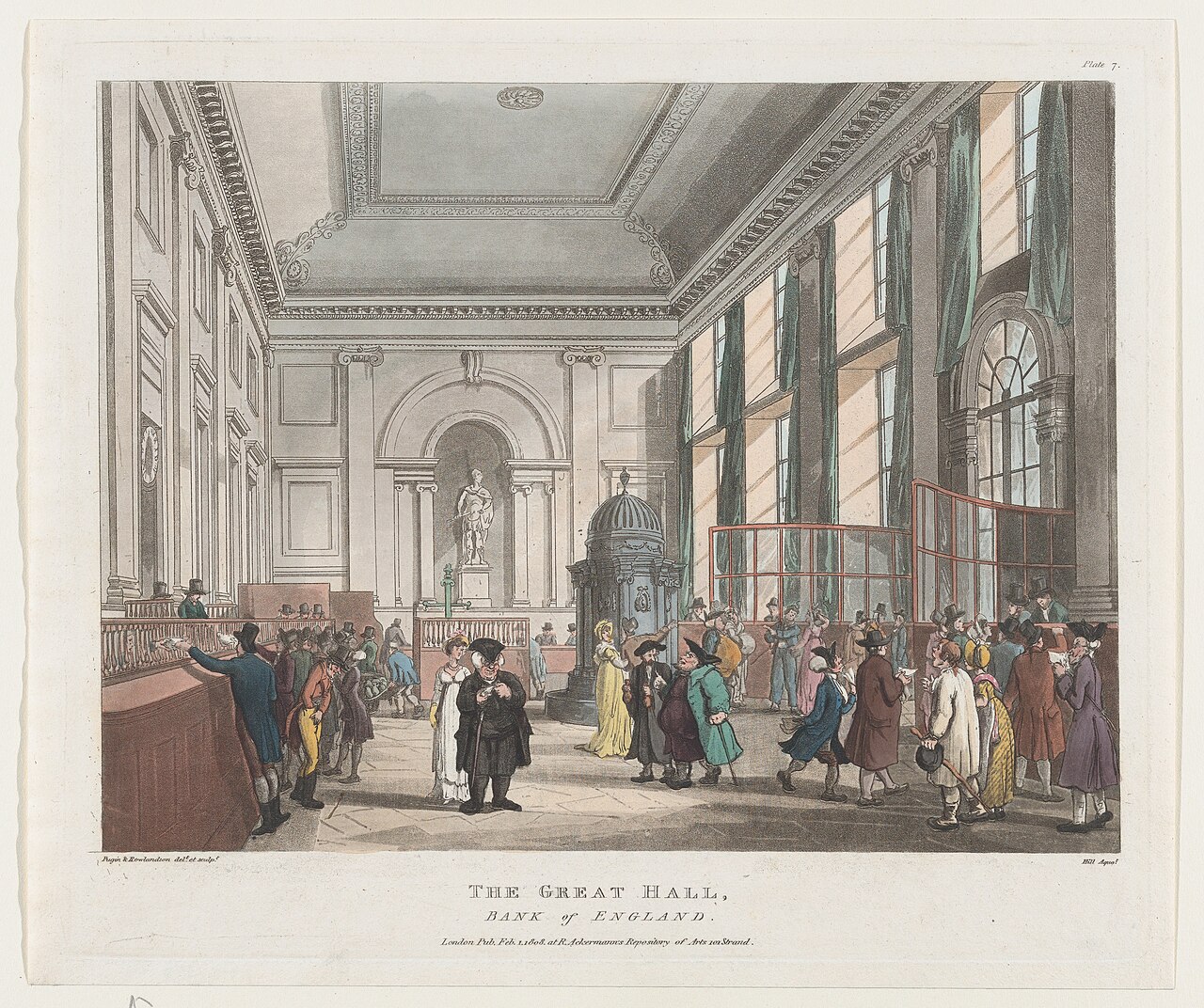
Britain is often credited with formally establishing gold convertibility in the early nineteenth century, and its dominance in international trade, shipping, and banking meant that other nations increasingly found it advantageous to link their own currencies to gold as well, both to trade more easily with British markets and to reassure foreign lenders and investors. Many historians describe the decades after roughly 1870 as the "classical gold standard" era, during which most major economies, including Germany, France, the United States, and Japan, maintained gold convertibility. Because currencies were fixed to gold and therefore to each other, merchants and bankers could estimate exchange risk with relative confidence, and international capital flowed more freely across borders to finance railways, mines, plantations, and government debt around the world. London emerged as the preeminent center of this capital flow, with British banks and bond markets channeling savings into infrastructure projects on nearly every inhabited continent, from Argentine railways to Indian irrigation works to mining ventures in southern Africa.
Bimetallism, Silver, and the Political Fights Over Money
The move toward gold was neither instant nor uncontested. Many countries, including the United States for much of the nineteenth century, operated under bimetallic systems that recognized both gold and silver as monetary metals, and the relative value set between the two metals became a recurring source of political conflict. As major economies progressively shifted toward gold alone in the 1870s, falling silver prices hurt silver-producing regions and debtor farmers who favored looser, more inflationary money. In the United States, this tension fed directly into the Populist and free-silver political movements of the late nineteenth century, which argued that a gold-only standard favored creditors and eastern financial centers at the expense of indebted farmers in the South and West. Similar debates over gold, silver, and paper currency played out in varying forms across Latin America and Asia, where some economies remained on silver or mixed standards well after Britain and the core European economies had moved fully to gold.
How Fixed Exchange Rates Reshaped Trade and Capital Flows
The gold standard's appeal rested on the discipline it imposed. A country running persistent trade deficits would see gold flow out to pay foreign creditors, which in theory tightened domestic credit, lowered prices, and made that country's exports more competitive again, restoring balance automatically. In practice, the system worked unevenly. Wealthy creditor nations, especially Britain, could often borrow and adjust more comfortably than smaller or colonized economies, whose currencies were frequently pegged to those of imperial powers on terms set with little local input. Many economies in Latin America, Asia, and Africa were drawn into gold-linked or silver-linked monetary arrangements that served the financing needs of European investors and colonial administrations as much as, or more than, local development priorities. The system also offered no reliable mechanism for countries facing a genuine economic shock, since defending a fixed gold value often required painful interest rate increases and wage or price cuts precisely when relief was most needed.
Crisis, Collapse, and the Interwar Struggle to Rebuild
World War One shattered the classical gold standard, as belligerent governments suspended convertibility to print money and finance the war effort. Attempts to restore the prewar system in the 1920s proved difficult; Britain's effort to return to its old gold parity in 1925, for instance, is widely viewed by economic historians as having overvalued the pound and strained the British economy. When the Great Depression struck in the 1930s, the gold standard is now generally regarded by economists as having worsened the downturn in many countries, because central banks defending gold convertibility were often forced to raise interest rates and restrict credit at the exact moment economies needed looser money to recover. Country after country abandoned gold through the early and mid-1930s, and those that left earlier, such as Britain in 1931, generally recovered sooner than countries that clung to gold longer.
Bretton Woods, the Dollar, and the End of Gold-Backed Money
After World War Two, representatives from dozens of countries met at Bretton Woods, New Hampshire, in 1944 to design a new international monetary order. Rather than returning to a pure gold standard, they created a system in which the United States dollar was convertible to gold at a fixed rate and other currencies were pegged to the dollar, with the newly created International Monetary Fund overseeing adjustments. This dollar-centered system supported a remarkable expansion of international trade and investment during the postwar decades, but it also depended on confidence that the United States could and would maintain dollar-gold convertibility even as its gold reserves came under growing pressure from dollars held abroad. That confidence eroded through the 1960s, and in August 1971 President Richard Nixon suspended dollar convertibility into gold, a decision often called the "Nixon shock," which effectively ended the gold-backed international monetary system for good. Within a few years, major currencies had shifted to floating exchange rates determined by market trading rather than fixed gold values.
The Gold Standard's Lasting Imprint on Global Finance
Although no major economy has formally tied its currency to gold since the early 1970s, the gold standard era left a deep mark on how international finance is organized today. It demonstrated both the benefits of monetary predictability for cross-border trade and investment, and the dangers of rigid monetary rules that cannot flex during economic crises, lessons that continue to inform debates among economists and policymakers about exchange rate regimes, central bank independence, and international monetary cooperation. Institutions born partly from the gold standard era's failures, including the International Monetary Fund, remain central to managing global financial stability. The episodic calls to "return to gold" that still surface in political debate are, most economic historians argue, more a reaction to monetary anxiety than a realistic blueprint, given how dramatically global trade and capital flows have grown since the fixed-exchange-rate era ended. Readers interested in the broader arc of industrial-era commerce can explore more of this period on the Trade Triad timeline.