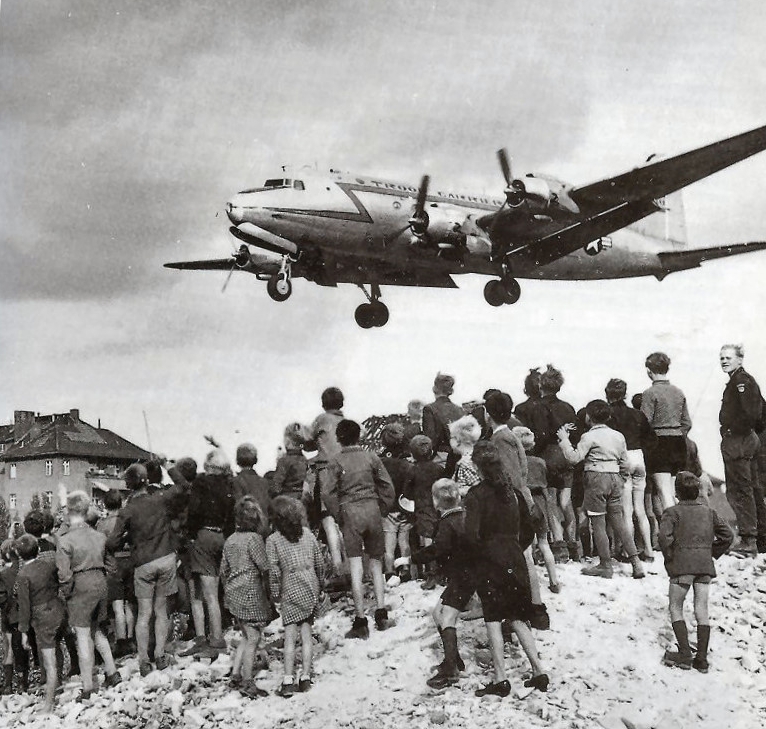
Carrying freight by air was, for decades, an afterthought to carrying mail. The U.S. Postal Service began regular airmail service in 1918, and the fledgling airline industry that grew up around it, including carriers like Pan American Airways, depended heavily on government mail contracts to stay afloat through the 1920s and 1930s. The aircraft of that era had little spare capacity for anything heavier than letters and small parcels, and long-distance cargo flying remained a novelty largely confined to mail, newspapers, and the occasional urgent machine part. Cargo flying as a serious branch of trade really emerged out of military necessity. During the Berlin Airlift of 1948 and 1949, American and British aircraft flew more than two hundred thousand flights to supply a blockaded city with food, coal, and medicine, demonstrating on a dramatic scale that airplanes could move substantial tonnage reliably and on short notice. That lesson carried over into civilian logistics as the postwar jet age began.
From Airmail to the Jet Age
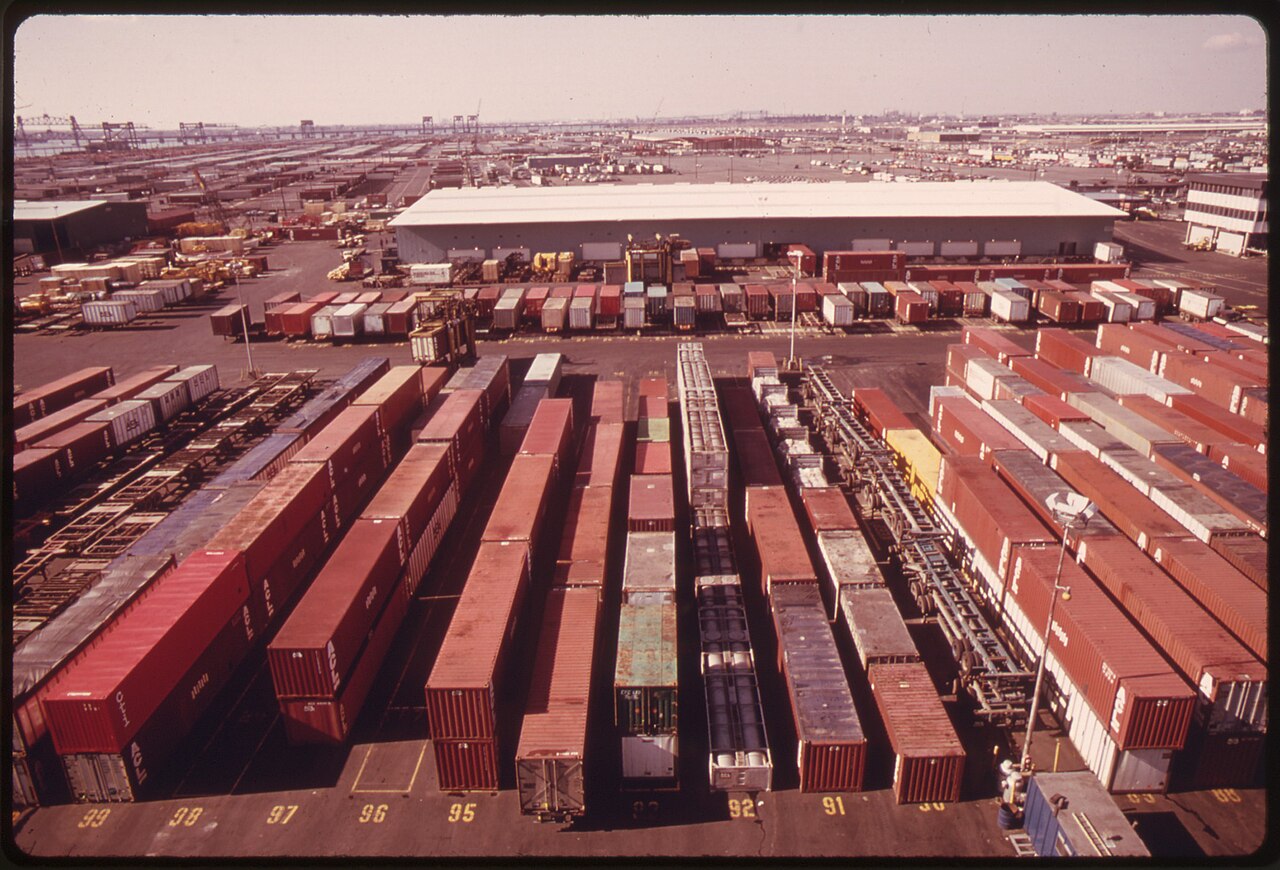
The introduction of jet airliners like the Boeing 707 in the late 1950s, followed by wide-body aircraft such as the Boeing 747 in 1970, gave airlines far greater capacity and range, and dedicated freighter versions of these planes soon followed. Air cargo in this period mostly served businesses willing to pay a premium for speed: machine parts needed urgently at a factory, medical supplies, newspapers, and high-value manufactured goods. It remained a relatively small, specialized corner of global trade compared to the surging volumes moving by sea in standardized containers, a technology covered in more detail in our article on container shipping and the modern supply chain.
Integrators and the Express Revolution
Air freight's transformation into a mass consumer-facing industry came from a different direction: the rise of integrated express carriers. Federal Express, founded by Frederick Smith and launched in 1973, built a hub-and-spoke network centered on Memphis, Tennessee, promising overnight delivery of documents and small packages across the United States, a service that sounded implausible at the time. United Parcel Service, already a dominant ground carrier, expanded into air delivery to compete, while DHL, founded in 1969, pursued a similar model internationally. These "integrators" controlled every link of the chain—pickup, sorting, flying, and final delivery—rather than simply selling cargo space to shippers, and the model proved so effective that it reshaped expectations about how fast goods could reasonably move.
Alongside the integrators, a large share of air cargo has always traveled in the belly holds of ordinary passenger aircraft rather than on dedicated freighters, a fact that became strikingly visible when the COVID-19 pandemic grounded much of the world's passenger fleet in 2020 and briefly disrupted global air cargo capacity. In recent decades, the growth of e-commerce has driven airlines and logistics companies to expand dedicated freighter fleets further still; Amazon built its own cargo airline, commonly known as Amazon Air, beginning in 2016, while Alibaba's logistics arm, Cainiao, has invested heavily in cross-border air routes to move goods ordered online from Chinese manufacturers to buyers overseas. These developments show how thoroughly e-commerce and air freight have become intertwined.
What travels by air today is a distinctive slice of world trade: goods that are either highly perishable, highly valuable relative to their weight, or urgently needed. Cut flowers grown in Kenya and Colombia, fresh seafood from coastal fishing regions, semiconductor components, pharmaceuticals and vaccines, and the surging volume of e-commerce parcels generated by platforms built on global online retail all move by air because the cost of flying them is justified by their value or their shelf life. Many historians and trade economists note that this has created genuinely new markets; flower farms in East Africa, for instance, would have essentially no way to reach European supermarkets within a usable freshness window without scheduled air cargo links.
Winners, Losers, and Hidden Costs
The benefits of this speed are real and widely distributed in some respects. Air freight has allowed smallholder farmers and specialized producers in developing regions to reach wealthy consumer markets that would otherwise be unreachable, and it has made rapid humanitarian response possible, from emergency medical shipments to disaster relief supplies flown into areas where roads or ports have been destroyed. During public health emergencies, including the distribution of vaccines and protective equipment amid the COVID-19 pandemic, air cargo networks served as one of the few logistics systems flexible enough to respond on short notice. Humanitarian organizations such as the World Food Programme and the International Committee of the Red Cross have similarly relied on chartered cargo aircraft to move emergency supplies into regions cut off by earthquakes, floods, or conflict, situations in which the days or weeks required by ocean freight would be far too slow to matter.
These benefits come with significant costs that are not always shared evenly. Air transport produces far more greenhouse gas emissions per ton of cargo moved than ocean or rail freight, and the aviation sector as a whole faces growing scrutiny over its climate impact as global trade volumes grow. Airports and the flight paths serving them generate noise and local air pollution that disproportionately affects nearby communities, which are often lower-income. The express delivery model has also been criticized for the working conditions it creates, including demanding schedules for pilots, ground crews, and delivery drivers operating under tight overnight windows. And because air freight remains relatively expensive, its benefits accrue disproportionately to producers and consumers who can afford the premium, reinforcing rather than narrowing some economic divides between wealthier and poorer regions. Pilots, loaders, and sorting-facility staff at major hub airports have also organized repeatedly over pay and scheduling, arguing that the industry's promise of ever-faster delivery times has been built in part on their willingness to work overnight and holiday shifts that most other logistics jobs do not require.
Lasting Significance
Air freight today carries a small fraction of global trade by weight but, according to industry figures compiled by groups such as the International Air Transport Association, accounts for a disproportionately large share of trade by value, precisely because it specializes in goods where time is money. It works in tandem with the sea and land logistics systems described elsewhere on this site, including the barcode and tracking technology that lets a package's location be known at every stage of its journey. As global commerce continues to prize speed alongside cost, air cargo's role as the fastest link in the supply chain seems unlikely to diminish, even as the industry faces pressure to address its environmental footprint. Readers interested in how this fits into the broader history of modern logistics can explore the modern logistics era on our timeline.