Long before European ships entered its waters, the Indian Ocean was already the setting for one of the world's largest and most diverse trading systems, linking East Africa, the Arabian Peninsula, the Persian Gulf, South Asia, Southeast Asia, and China. What made this ocean so navigable long before the advent of modern instruments was its predictable seasonal monsoon wind pattern, which blows from the southwest for part of the year and reverses to blow from the northeast for the remainder. Sailors who understood this cycle could plan outbound and return voyages around it, and many historians trace organized long-distance Indian Ocean trade back more than two thousand years, with activity intensifying considerably during the medieval period, roughly the seventh through fifteenth centuries CE, as a shared commercial culture developed around key ports.
A Network Built on Monsoon Winds and Shared Ports
Unlike many of the better-known overland routes of Eurasia, Indian Ocean trade was fundamentally maritime, and its key infrastructure was a string of port cities rather than roads or caravan stops. Cities such as Kilwa and Mombasa on the East African coast, Aden and Hormuz near the Arabian Peninsula and Persian Gulf, Calicut and other ports along India's Malabar coast, and Malacca in Southeast Asia functioned as nodes where goods, ships, and crews from different regions converged and exchanged cargo. Many of these cities developed genuinely cosmopolitan populations, with merchant communities from Arabia, Persia, India, East Africa, and China often maintaining long-term residences far from their places of origin. Swahili city-states along the East African coast, for example, developed a distinct culture that blended African, Arab, and Persian influences, reflected in language, architecture, and religious practice, a product of sustained contact through trade rather than conquest.
The region's merchants, notably including Arab, Persian, Gujarati, and later also Chinese traders during certain periods, developed sophisticated navigational knowledge, including star-based navigation and detailed knowledge of coastal landmarks, monsoon timing, and seasonal ports. Islam spread widely along these trade routes beginning in the seventh and eighth centuries, carried by merchants and religious scholars as much as by any centralized effort, and it became a unifying cultural and legal framework that facilitated trust and commercial dealings between merchants from otherwise very different societies, since shared religious and legal norms could reduce the uncertainty of doing business with unfamiliar partners.
Goods, Technologies, and Moments of State Involvement
The range of goods moving through Indian Ocean trade was remarkable. Spices, including pepper, cinnamon, cloves, and nutmeg, moved from South and Southeast Asia toward Middle Eastern and eventually European markets, commanding high prices that reflected both their desirability and the length and risk of the journey. Textiles, particularly fine cotton cloth from India, were traded in enormous volumes and influenced fashion and consumption patterns across the Indian Ocean world and beyond. Porcelain and silk from China, ivory, gold, and timber from East Africa, horses from Arabia and Persia, and glass, metalwork, and other manufactured goods from various regions all moved through this interconnected system, often changing hands multiple times between producer and final buyer.
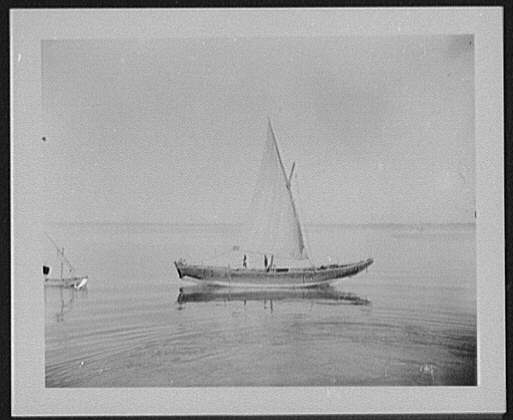
Shipbuilding technologies varied regionally, from the stitched-plank dhows common in the western Indian Ocean to larger Chinese vessels. Sources describe enormous Chinese treasure fleets under the Ming dynasty admiral Zheng He making multiple voyages across the Indian Ocean in the early fifteenth century, reaching as far as East Africa; these expeditions are often cited by historians as evidence of just how extensive and technically advanced Indian Ocean seafaring networks had become by that period, even though the fleets themselves represented state-sponsored diplomacy and tribute collection as much as ordinary commercial trade. Most day-to-day Indian Ocean trade, by contrast, was conducted by private or family-based merchant networks operating largely independently of any single state's direct control, a decentralized structure not unlike the one explored in this site's article on Phoenician maritime trade, though operating across far greater distances and with far more participants.
Prosperity Alongside Exploitation and Disruption
The Indian Ocean trading world is often described in generally positive terms, as an example of relatively open, multiethnic, and multireligious commercial exchange compared to some other historical trade systems, and there is substantial truth to this characterization. However, this picture should not be idealized. The same networks that moved spices and textiles also moved enslaved people, and slavery was a documented, significant feature of Indian Ocean commerce for many centuries, with captives taken from East Africa, parts of South Asia, and elsewhere sold into bondage across the region, including in Middle Eastern markets. This trade in human beings represents a serious and sometimes underacknowledged cost of the network's otherwise celebrated connectivity.
Political and military disruption also shaped the network's history. Portuguese fleets arriving in the Indian Ocean beginning in 1498 under commanders seeking direct access to the spice trade used violence and coercion to seize key ports and attempted to monopolize portions of the trade that had previously operated under far more decentralized and competitive conditions, a shift that many historians treat as a turning point toward more militarized European involvement in the region's commerce. Even before this period, rivalries between regional powers occasionally disrupted specific ports or trade relationships, and the wealth generated by trade was distributed highly unevenly, concentrated among merchant elites and ruling classes in port cities while laborers, sailors, and enslaved workers bore much of the physical burden of the system with little of its reward.
Lasting Significance for Global Commerce
The medieval Indian Ocean trading world demonstrates how a shared environmental rhythm, the monsoon wind cycle, combined with widely dispersed merchant communities and flexible, non-state commercial networks, could sustain an enormously productive system of exchange across thousands of miles and dozens of distinct cultures, without requiring unification under a single empire. It helped diffuse technologies, crops, religious traditions, and artistic styles across an enormous geographic range, leaving durable cultural fingerprints still visible today in places such as the Swahili coast and parts of maritime Southeast Asia. It also set the stage, often painfully, for the era of European maritime expansion that followed, as outside powers sought to insert themselves into a trading system that had already been operating successfully, and profitably, for many centuries before their arrival. Readers interested in another medieval network shaped by very different geography can see this site's article on the trans-Saharan trade routes, or explore the wider medieval trade timeline.