For more than two thousand years, the desire for a handful of aromatic plant products, pepper, cinnamon, cloves, nutmeg, and ginger among them, shaped shipping routes, financed empires, and drew rival trading powers into direct and often violent competition. Spices were valuable not simply because they tasted good; in the medieval and early modern world they were also prized as preservatives, medicines, and status symbols, commanding prices in European markets that could be many times their cost of production in the growing regions. Understanding why merchants, monarchs, and later entire colonial companies organized so much of their activity around these plants requires looking at both the geography of where spices actually grew and the long chain of intermediaries who moved them to distant buyers.
Origins in South and Southeast Asia
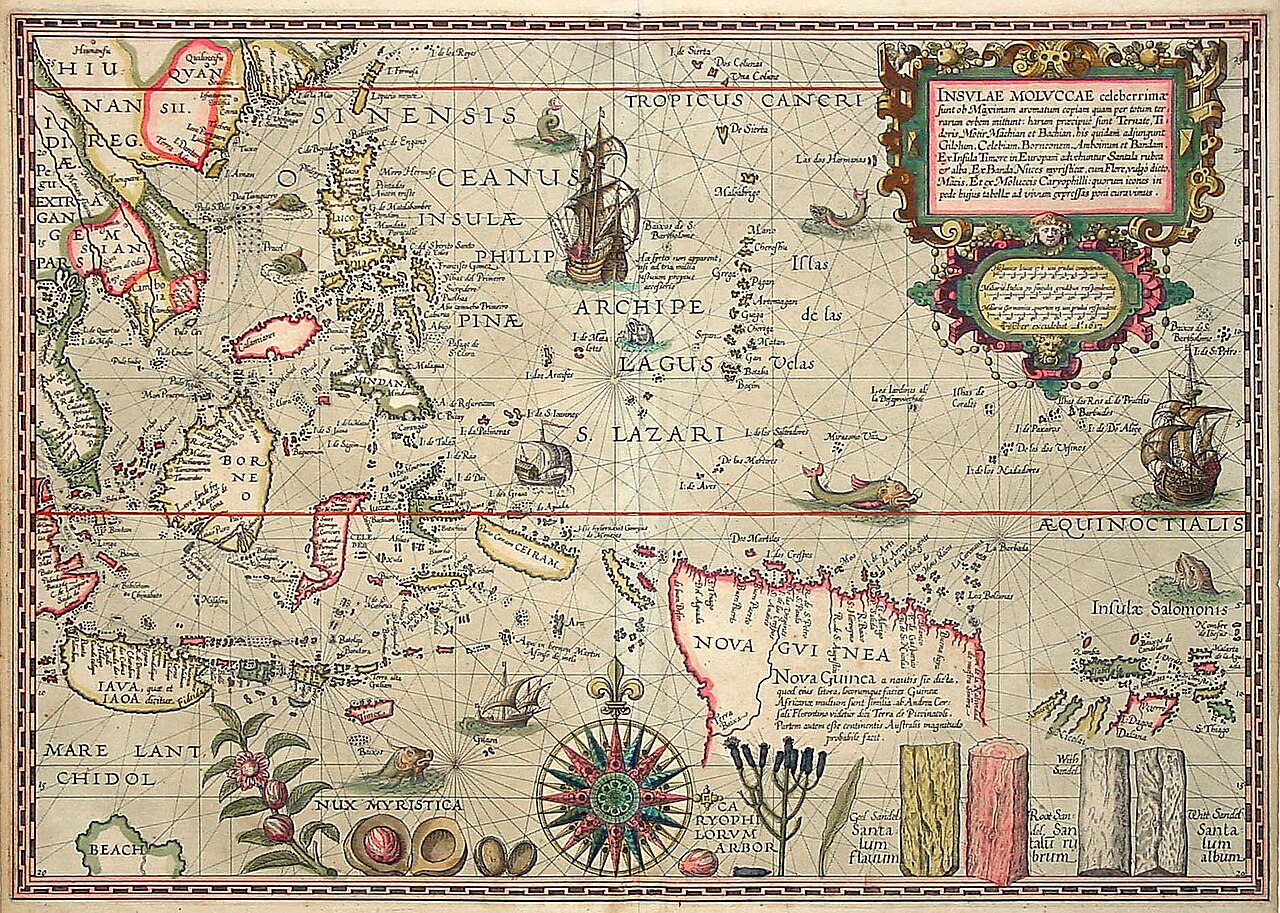
Most of the spices most prized by distant markets originated in a relatively small number of growing regions. Black pepper came primarily from the Malabar coast of southern India. Cinnamon was associated closely with Sri Lanka, known to many medieval traders as Ceylon. Cloves and nutmeg had an even more restricted geography: both grew almost exclusively in the Maluku Islands, a small archipelago in eastern Indonesia that European traders would later call the Spice Islands. Sources suggest that trade in these goods along Indian Ocean sea lanes dates back at least to the first centuries of the Common Era, and quite possibly earlier, carried by Arab, Indian, and Southeast Asian sailors who understood the seasonal monsoon winds well enough to sail reliably between East Africa, the Arabian Peninsula, India, and the islands of Southeast Asia.
Roman writers recorded the arrival of pepper and other eastern goods through Red Sea ports and later through intermediaries in Egypt and Arabia, reaching Mediterranean markets at substantial markups. This pattern, of production concentrated in South and Southeast Asia and consumption concentrated in the Mediterranean world and later Europe, would persist for well over a thousand years, even as the specific intermediary groups controlling each leg of the journey changed.
Middle Eastern and Venetian Intermediaries
Through the early medieval and high medieval periods, the overland and sea routes carrying spices toward Europe passed through a succession of Middle Eastern polities and trading cities, including Arab, Persian, and later Mamluk-controlled ports in Egypt and the Levant. Muslim merchant networks became especially dominant in Indian Ocean trade from roughly the eighth century onward, operating a commercial system that linked East Africa, Arabia, India, and Southeast Asia long before European ships ever entered those waters.
From the Mediterranean side, Italian maritime republics, particularly Venice and, to a lesser extent, Genoa, built enormous wealth by securing privileged access to spice shipments arriving at Alexandria and other eastern Mediterranean ports, then distributing them throughout Europe. Venetian merchants guarded this position jealously, and the city's prosperity through the later Middle Ages depended heavily on maintaining commercial relationships with Mamluk Egypt even as European attitudes toward Muslim powers were often shaped by the rhetoric of the Crusades. This arrangement meant that by the time pepper or cloves reached a market in Bruges or London, the price reflected not just the cost of cultivation but a long chain of tolls, markups, and profit margins taken by Arab, Egyptian, and Venetian intermediaries alike.
The Maritime Scramble for Direct Access
By the late fifteenth century, Iberian monarchies had strong financial incentives to find a sea route to Asian spice sources that would bypass Middle Eastern and Venetian middlemen entirely. Portuguese navigators, building on decades of exploration along the West African coast, rounded the southern tip of Africa; many historians date the first Portuguese voyage reaching India by this route to 1498. Spanish-sponsored voyages pursued a westward route toward the same goal, a search that led instead to sustained European contact with the Americas, a turning point explored further in the account of the Columbian Exchange.
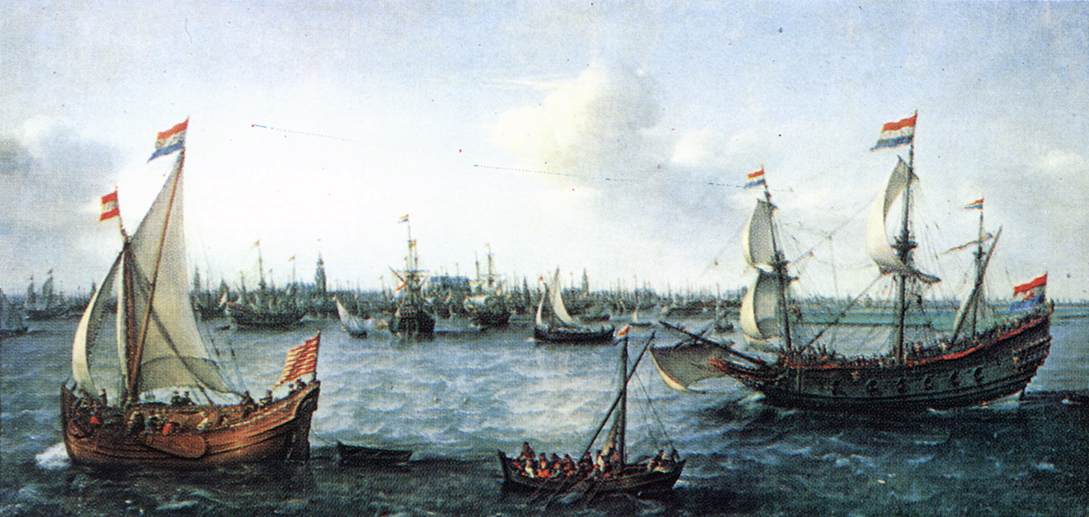
Portuguese traders established fortified posts at key points along Indian Ocean shipping lanes, including Goa and Malacca, attempting to control spice flows by force rather than through negotiated commercial access alone. Within little more than a century, the Dutch and English established rival trading companies, the Dutch East India Company and the English East India Company among them, chartered with extraordinary government-backed powers to make war, negotiate treaties, and establish monopolies on behalf of investors. These companies increasingly targeted direct control over spice-producing islands themselves rather than simply trading at their ports, a strategy connected to the wider maritime routes of Southeast Asia that had carried regional trade for centuries before European arrival.
Monopoly, Violence, and Its Costs
The pursuit of spice monopolies carried a severe human cost that modern accounts of the trade increasingly acknowledge directly. The Dutch East India Company's campaign to control nutmeg and mace production in the Banda Islands during the early seventeenth century is among the starkest examples: company forces killed, enslaved, or forcibly displaced much of the existing Bandanese population and redistributed the land to company-approved planters in order to enforce an absolute monopoly on nutmeg. Elsewhere in the Spice Islands, the Dutch company deliberately limited clove cultivation to a single controlled island, destroying trees elsewhere to keep prices high, a policy that devastated the economies of communities that had long grown cloves for a living. Portuguese and later Dutch and English trading operations also frequently relied on coercive labor arrangements and military force to secure favorable terms from local rulers, disrupting long-established regional trading relationships across the Indian Ocean world.
At the same time, the global spice trade produced outcomes that were not purely destructive. It financed extensive exploration and cartographic knowledge that expanded understanding of global geography, introduced new food preservation and culinary techniques across continents, and sustained urban economies in India, Sri Lanka, Southeast Asia, the Middle East, and Europe for well over a millennium. Profits from spice commerce helped fund the growth of major trading cities and later underwrote some of the earliest joint-stock corporations, institutions that would become central to the structure of global capitalism.
Lasting Significance
The spice trade's long run, from ancient monsoon-driven voyages across the Indian Ocean to the chartered monopoly companies of the seventeenth century, helped establish patterns of global commerce that outlasted the spices themselves. The competition to control Asian spice sources accelerated European maritime exploration, contributed directly to the colonization of parts of South and Southeast Asia, and demonstrated both the extraordinary profits and the human costs that could accompany efforts to dominate a single global commodity. Few other goods in pre-modern history did as much to connect distant regions of the world, for better and for worse, into a single interdependent commercial system, one whose basic outlines are traced further in the broader timeline of the maritime era.