Between 1405 and 1433, the Ming dynasty government in China organized seven major naval expeditions that carried tens of thousands of sailors, soldiers, diplomats, and craftsmen across the Indian Ocean, reaching as far as the East African coast and the Arabian Peninsula. These voyages, commanded by the court eunuch admiral Zheng He, are often remembered through his name alone, but they were fundamentally a state project: an enormous undertaking of shipbuilding, provisioning, navigation, and diplomacy involving thousands of officials, artisans, and sailors, authorized and funded by the Ming imperial court for its own strategic and political purposes.
Ming China's Turn Outward after Decades of Upheaval
The Ming dynasty, established in 1368 after the collapse of Mongol Yuan rule, spent its early decades consolidating control over a China recovering from war, plague, and administrative breakdown. By the early 1400s, under the Yongle Emperor, the dynasty had stabilized enough to turn its attention outward, seeking to restore and expand China's diplomatic and commercial standing across maritime Asia. Some historians suggest the emperor also hoped to project Ming power and legitimacy abroad after seizing the throne from his nephew in a civil war, though the precise mix of motives behind the voyages—trade, diplomacy, tribute collection, and political display—remains a subject of scholarly debate rather than settled fact.
Assembling the Treasure Fleets: Scale, Technology, and Thousands of Participants
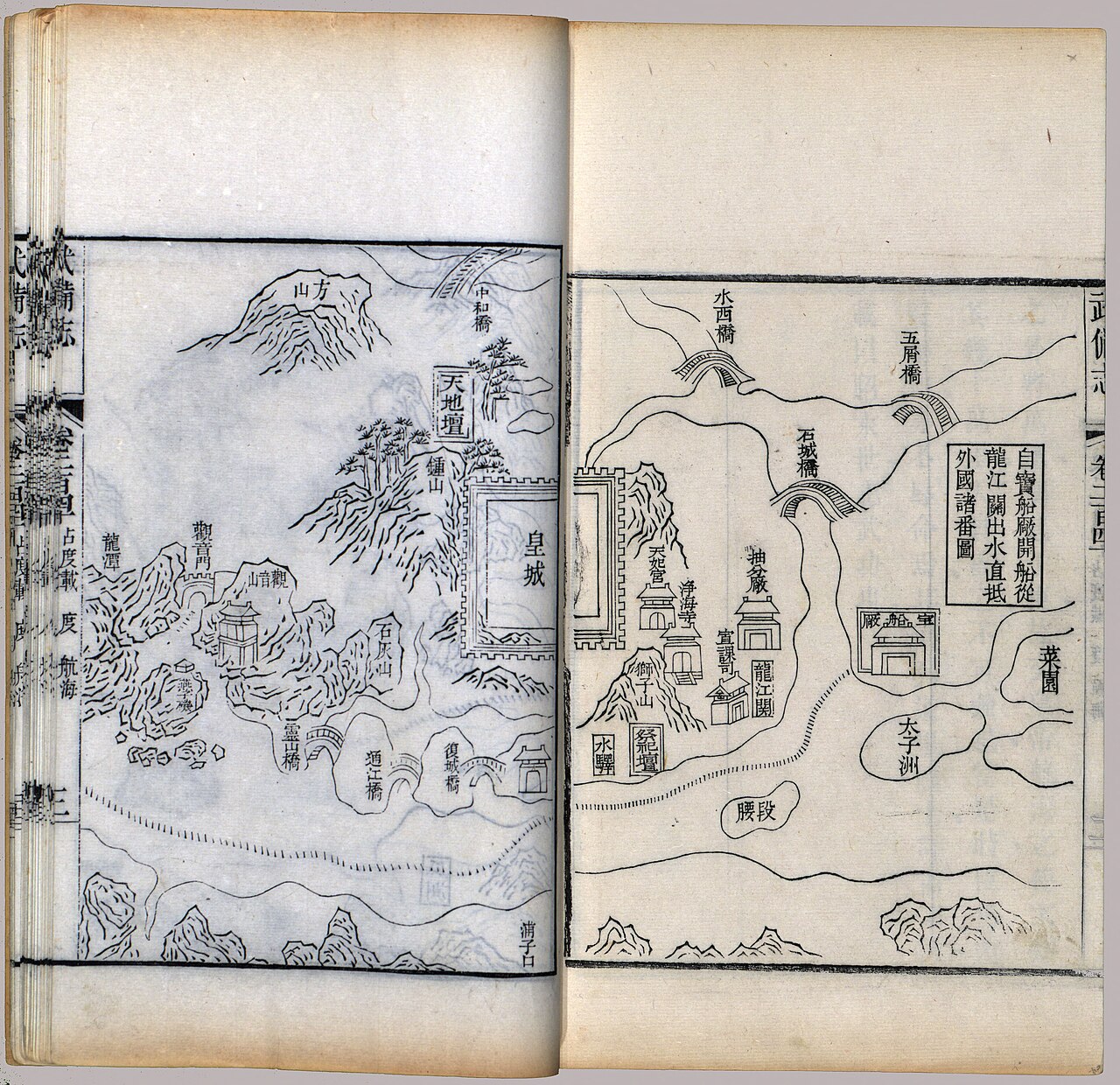
The scale of these expeditions dwarfed anything in Europe at the time. The largest ships, often called "treasure ships," are described in some Chinese sources as reaching lengths of over 400 feet, though modern historians debate whether these figures were exaggerated for political effect; even more conservative estimates describe vessels considerably larger than contemporary European ships. Individual fleets reportedly included over 300 ships and more than 27,000 personnel on the larger voyages, encompassing sailors, soldiers, translators, physicians, astrologers, and merchants. Building and provisioning fleets of this size required enormous state investment in shipyards, timber supplies, and coordinated bureaucracy—an undertaking far beyond what any single admiral, however capable, could have organized alone. Zheng He himself, a Muslim eunuch from Yunnan who had entered court service as a young man, served as the court's chosen commander, but the fleets' logistics depended on a vast supporting apparatus of Ming state administration.
Funding for the voyages came directly from the imperial treasury, and critics within the Ming bureaucracy, many from the Confucian scholar-official class, argued for decades that the expense diverted resources from more pressing concerns such as northern frontier defense and canal maintenance. This internal debate over priorities, rather than any single technological or strategic failure, did much to determine the voyages' ultimate fate once a more cautious court came to power.
Navigating such long voyages relied on technology that was, for its time, remarkably advanced: magnetic compasses, detailed star charts for celestial navigation, and rudders and watertight bulkhead compartments that made Chinese ships unusually resistant to sinking from a single hull breach. Fleet pilots also used accumulated written sailing directions, sometimes called rutters, that recorded compass headings, sailing times, and landmarks between ports, allowing routes to be repeated reliably across different voyages and crews rather than depending on any one navigator's memory.
Diplomacy, Tribute, and Force across the Indian Ocean World
The treasure fleets visited ports across Southeast Asia, South Asia, the Persian Gulf, the Arabian Peninsula, and the East African coast, including cities such as Malindi and Mogadishu, which were also, during roughly this period, prosperous Swahili trading centers described in our article on the Swahili Coast and the Indian Ocean city-states. At each stop, Ming envoys sought to establish or reaffirm tributary relationships, exchanging Chinese silk, porcelain, and other manufactured goods for local products including spices, exotic animals (a giraffe brought back from East Africa reportedly caused a sensation at the Ming court), gemstones, and textiles. These exchanges were framed within a tribute system that cast foreign rulers as subordinate to the Chinese emperor, a diplomatic fiction that did not always match the real balance of power on the ground. The voyages were not purely peaceful: Zheng He's forces intervened militarily on at least a few occasions, including conflicts in Java and Sumatra and the capture of a local ruler in Ceylon, demonstrating that the fleets combined commercial and diplomatic goals with a readiness to use force when Ming interests or prestige were challenged.
Later voyages pushed further west, reaching the Persian Gulf port of Hormuz and the Arabian port of Jeddah, near Mecca, and gathering detailed information about ports, currents, and local rulers that was recorded in surviving navigational charts and travel accounts, including one attributed to the voyages' interpreter, Ma Huan. Tribute and trade goods flowing back to China included not only exotic animals and gemstones but also practical commodities such as pepper, sandalwood, and dyes, reflecting how the voyages combined genuine commercial exchange with the ceremonial display of distant rulers' submission to the Ming court.
The Abrupt End of the Voyages and Its Consequences
After Zheng He's seventh and final voyage, the Ming court ended the treasure fleet program, and subsequent emperors and officials actively discouraged large-scale state-sponsored maritime expeditions, in part reflecting a long-running debate within the Ming bureaucracy over the voyages' enormous cost relative to their practical benefit to the agrarian, inward-facing priorities many officials favored. Shipyards were allowed to fall into disrepair, and later Ming policy restricted private overseas trade and shipbuilding for several periods, though coastal and regional maritime commerce never fully stopped. This retreat from state-sponsored long-distance voyaging happened at almost exactly the same historical moment that European maritime powers were beginning their own era of oceanic expansion, a juxtaposition historians continue to debate and that invites comparison with the overland disruptions discussed in our article on the Mongol Peace and the revival of the Silk Road, after which interest in alternative sea routes grew across multiple regions.
Rediscovering the Treasure Fleets' Place in Trade History
For centuries afterward, Zheng He's voyages received relatively little attention within China's own historical tradition, overshadowed by the bureaucratic factions that had opposed them. In recent decades, however, historians, museum curators, and the Chinese government alike have revisited the treasure fleets as evidence of a precociously advanced and far-reaching maritime capability, achieved through state coordination on an enormous scale rather than through the initiative of a single explorer. The voyages demonstrate that oceanic long-distance trade and diplomacy in the fifteenth century were not a uniquely European achievement, and that Ming China possessed, at least briefly, both the technology and the organizational capacity to project commercial and political power across the Indian Ocean world. Readers can explore more of this broader medieval trading context in our medieval trade timeline.